A source-first index of official Altoona Police Department records, public contacts, annual reporting, ALPR context, and budgets.
Published official sources
Start with the records that are available.
Each card leads to a published source or a clearly marked local research path. The page does not treat a source link as proof of claims beyond the linked record.
Official department source
Department page
The official page describes a community-involvement and customer-service mission, with courage, unselfishness, and dependability as stated values.
Our position: A community-involvement mission and a real-time crime center that flags cars driving into town from national hotlists pull in different directions. We would rather see a department that is part of this community than one watching for people coming in. Why we say this
The official department page links its 2025 annual publication, which documents the ARTIC real-time crime center, the K9 Unit, and the department roster detailed below. Other claims in the publication still require checking the linked document directly.
Emergency: 911. Non-emergency: (515) 967-5132, press 1. Police administration: press 3. Public-records requests route through the city records process.
The Local corner gathers upcoming meetings, the current Council roster, and guides to local records. None of those sources documents department leadership, contract terms, fee calculations, or named personnel.
Officer pay by step from the department’s Teamsters contracts on file with the Iowa Public Employment Relations Board, 2007 through June 30, 2025, plus detective, field training, shift, K9, and longevity pay. These are rates by step, not what any named officer is paid.
In the department’s own words: the 2025 annual report
What the 2025 report says, and where we differ.
Short, exact quotes from the department’s self-published 2025 annual report, each followed by the site’s position, labeled as such. The quotes are the department’s claims, not independent verification; we cite the report rather than reproduce it. Why this site exists.
ARTIC, and where it is going
“The first real‑time crime center in the state of Iowa”
The report says Altoona combined city cameras, license plate readers, drones, dash cameras, and body-worn cameras—previously separate systems—into the Altoona Real-Time Intelligence Center (ARTIC). It says a call for service can automatically activate nearby cameras and sensors before officers arrive.
“the Altoona Real‑Time Intelligence Center, ARTIC, was born, making it the first real‑time crime center in the state of Iowa.”
Our position: We take the department at its word: this program is not a pilot anymore and it is not going away. But it was announced outside the minutes. We have not found ARTIC named in the Council minutes on this site (see /votes). Something the department calls the first of its kind in Iowa, with more to come, belongs on a Council agenda as its own item, debated before each next step is bought, not described in a self-published report and invitations to come see it. Why we say this
Scale
“Hundreds of cameras”
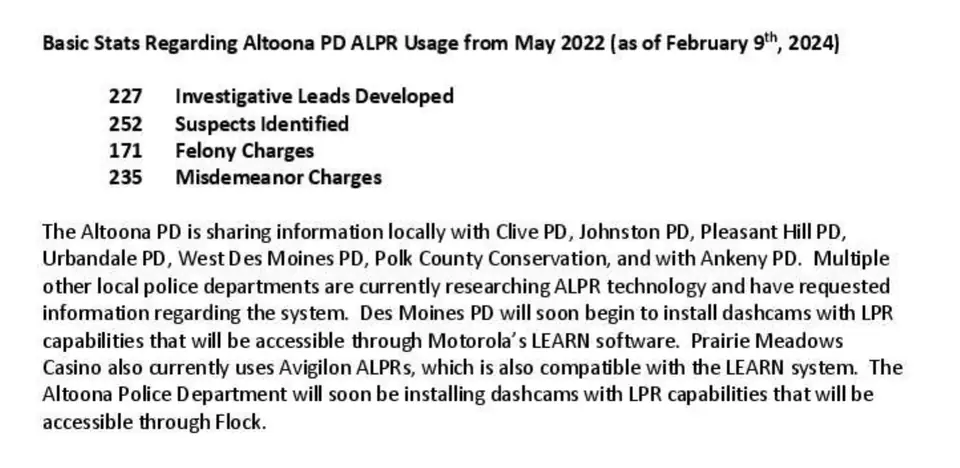
“Today, that system includes hundreds of cameras, many powered by artificial intelligence that helps officers identify vehicles or individuals connected to criminal activity in a fraction of the time it once required.”
Our position: The department is proud of the scale; we are worried by it. The vendor portals count only plate-reader cameras (see the tracker). The department’s own count of all connected cameras is far larger, and it says many of them use artificial intelligence to identify people as well as vehicles. A town where people leave bikes unlocked did not ask to become one of the most watched in Iowa. Why we say this
Who the program is aimed at
“82 percent”
“Between 2018 and 2022, 82 percent of all arrests made by the Altoona Police Department involved individuals who did not live in Altoona.”
Our position: This is the department’s own figure, which we have not verified. If the problem is visitors passing through, a network that can read every resident’s car every day, including on the way to work, school and church, reaches far past the problem described. Why we say this
Results
“Immediate and measurable”
“The impact was immediate and measurable, particularly in violent crime investigations, where clearance rates climbed significantly.”
Our position: The report pairs its clearance-rate table with the date Intelligence-Led Policing began in May 2022. Those are the department’s own numbers, not independently checked, and a rise after a start date does not show the cameras caused it. Whether the cameras work isn’t our argument; it is about who authorized them, how they are used, and who watches the watchers. “Continued investment” is a budget request, and budget requests belong in public at the Council table. Why we say this
Outside reporting: the same outlet reports, from Iowa Department of Public Safety data, that about three-quarters of the people Altoona police arrested in 2023 and 2024 were recorded as nonresidents, and that some offense-specific clearance measures, burglary most of all, improved after the readers were deployed, unevenly across offenses. It says the records it reviewed do not establish that the cameras caused the change, and this site’s own offense series does not carry arrest residency. Restoring Democracy’s Promise, “Altoona’s Plate Reader Network Goes Beyond Flock,” Timothy C. Tucker, September 14, 2026 (updated September 17).
Drones
“Drones as First Responders”
“In 2025, Altoona began implementing its own Drones as First Responders program.”
Our position: Drones add a camera that can go anywhere, over any yard, at the click of a button. We have not found the police drone program named in the Council agenda item titles on this site. Before it grows, residents deserve a public policy on when drones fly, what they record, and how long the video is kept. Why we say this
Connect Altoona
Registered versus integrated
“registration does not give police access to live feeds”
Our position: The safeguard covers registration only. Integration does give real-time access, and the report says schools, retail centers, places of worship and entertainment venues contribute cameras to the network. Who decides what counts as an emergency, and does anyone outside the department see how often that access is used? “The more cameras connected” is the direction we are asking the public to weigh. Why we say this
Year over year
What the department’s annual reports say, report by report.
Figures the Altoona Police Department printed in its 2023, 2024 and 2025 annual reports, side by side, each with the page it came from. They are the department’s own numbers, not independent verification, and none of them shows what a program or camera caused. A blank cell means that report does not state the figure, not that it was zero. Where two reports count a thing differently, the row says so and the figures should not be compared.
Police annual reports, 2023 to 2025
One row per measure, in the reports’ own figures, with each report’s page. Point at a figure to see the report’s exact words.
Open the table: every measure, report by report
Figures printed in the Altoona Police Department’s annual reports, by report.
No trend chart: no figure appears in all three reports, and the one multi-year series, the 2025 report’s share of cases cleared, is the department’s own claim about its methods with no case counts behind it, so we list it rather than chart it. The 2023 and 2024 reports were released in response to a public-records request and are not posted online; we list figures from them, not the reports or their photos of residents and staff. Camera counts the records state are charted on the ALPR tracker.
Altoona Police Department roster, as of the 2025 annual report.
This list is transcribed from the photo roster (“Altoona Police Department 2025”) and K9 pages of the department’s self-published 2025 annual report. It is current as of that report, not necessarily today: people may have since retired, been promoted, or joined. Mayor Dean O’Connor also appears at the top of the photo roster. Each name links to a People profile that gathers the report’s description and every mention in Council minutes (swearings-in, promotions, awards, and meetings attended).
The department’s own technology page, in its own words.
Altoona publishes a detailed ALPR explainer that directly answers many common questions. It is the department’s own account, not independent verification, but it is a primary source and worth reading in full before assuming how the system works. Under each statement, a marked note gives the site’s own position; the reasoning is on Why this site exists.
What it is — and isn’t
A vehicle observation, not a tracking device
The page says ALPR records a license plate, vehicle characteristics, date, time, and camera location only — not the driver’s identity or the registered owner’s personal information. It states ALPR is not facial recognition, not a speed or red-light camera, not GPS, and does not continuously follow a vehicle between cameras.
Our position: A snapshot versus a month of snapshots. Each statement is true one camera at a time. But a car that passes the same cameras every day is read again and again, and 30 days of those reads show when you leave home, where you go and when you come back: a movement history. The tracker has the vendors’ current 30-day totals. Why we say this
The page cites Iowa law requiring captured plate data to be deleted within 30 days unless it is copied into an ongoing case file. It says every search requires a documented law-enforcement reason and case number, is logged by user, and that Altoona’s systems are audited quarterly. It also says provider contracts prohibit selling the data.
“every search or query is logged and auditable. All ALPR systems are audited quarterly to be sure that they are being used appropriately, and for legitimate law enforcement purposes only.”
Our position: Thirty days is still a month of where every passing car was seen, and a documented reason and case number is not a warrant: no judge approves the search. The rolling window also means the public record of the program disappears as fast as the data does, unless someone saves it every day, which is why the tracker does. And if every search is logged and audited quarterly, publish the audits: we have not found a plate-reader audit in the Council agenda item titles on this site, and residents can request the audit records (the records guide shows how; a records request for them is open, and the department’s retention schedule lists plate-reader data at up to 30 days). Why we say this
A cited Fifth Circuit ruling on public-road ALPR use
The page cites United States v. Porter (5th Cir. 2026) as a federal appellate decision holding that the ALPR use presented in that case did not constitute a Fourth Amendment search, distinguishing periodic fixed-camera observations from continuous GPS-style tracking. It adds that courts still examine a system’s reach, retention, and use case by case.
Our position: Legal isn’t right. The Supreme Court has required a warrant for long-term GPS tracking (United States v. Jones, 2012) and for historical cell-phone location records (Carpenter v. United States, 2018). Courts have not settled how that applies to plate readers, and when the law is still unsettled, we believe the City should not have gone first, especially on residential streets. Why we say this
An Oklahoma federal court held a warrantless Flock search was a Fourth Amendment search
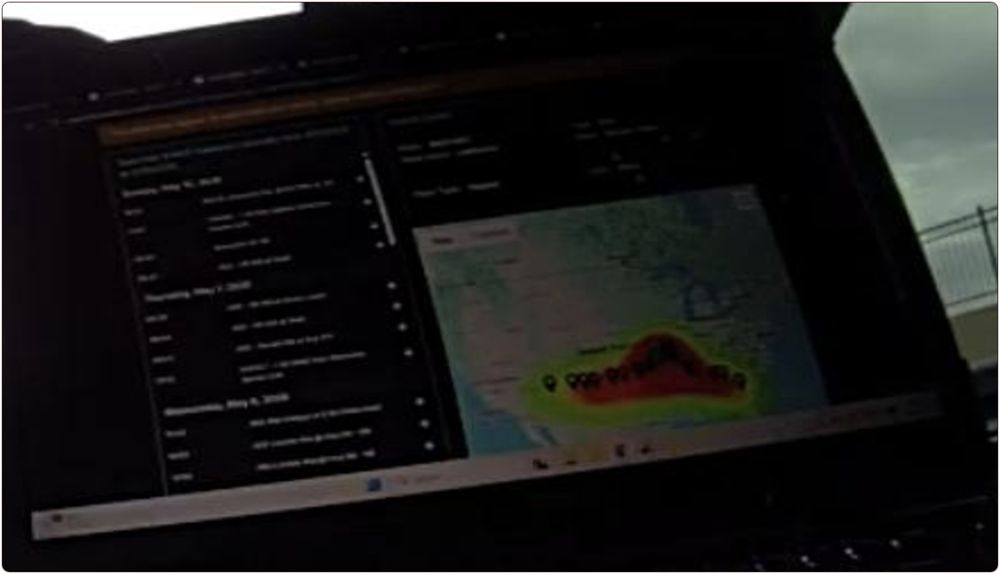
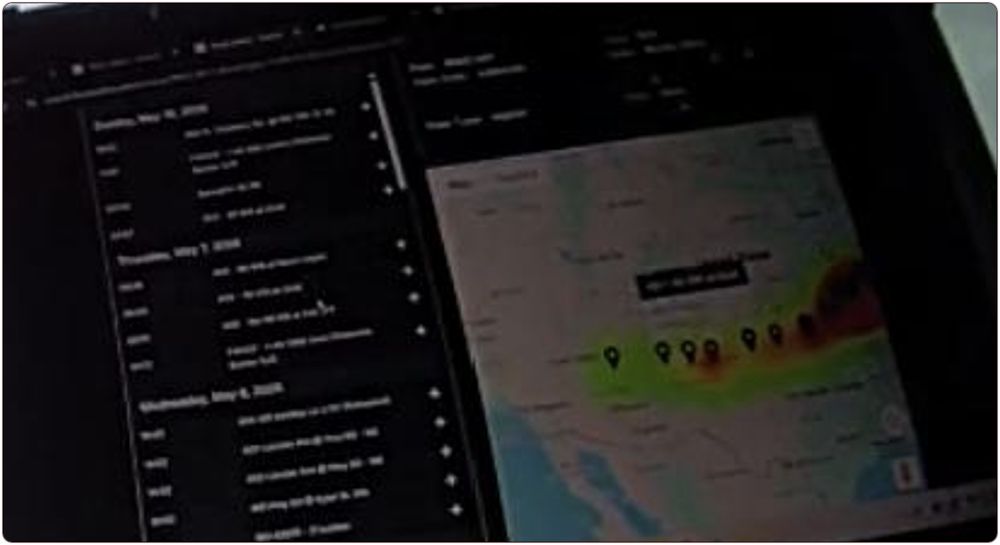
On October 1, 2026, a federal district judge in the Northern District of Oklahoma granted a motion to suppress in a highway drug case. The court found that because the plate-reader systems a sheriff’s deputy used (Flock and VehicleManager) to search the driver’s historical location information “intruded on her reasonable expectation of privacy in the whole of her physical movements, it was a search under the Fourth Amendment,” and that the search “was not supported by probable cause, and it was done without a warrant” (Opinion and Order, p. 37). The court describes the deputy as having had access to “an entire month’s worth of location data” for the plate, “including more than fifty sightings across multiple states” (p. 34). The court suppressed the evidence on two separate grounds: the deputy extended the traffic stop without reasonable suspicion (Part II.B), and the plate-reader search (Part II.C).
The deputy’s plate-reader query, as the court reproduced it
Bodycam frames of the query result on the patrol-car screen: a list of dated sightings beside a map of where the cameras saw the car. The court reproduced them in its Opinion and Order (pp. 4 and 17) from the bodycam exhibit (ECF No. 47-6 at 18:19:32 and 18:24:50). They are blurry in the filing too.
Source: U.S. District Court, N.D. Okla., Case No. 4:26-cr-00189-SEH, ECF No. 62, Opinion and Order, pp. 4 and 17.
Not binding in Iowa. A district court’s ruling decides only its own case, and this court is in the Tenth Circuit; Iowa is in the Eighth. The court notes that “nearly every court examining the issue to date has determined that ALPR technology use is not a search” (p. 29), and cites three other Oklahoma federal district court decisions that came out that way (pp. 29-30). Separately, the Fifth Circuit ruling the City cites, above, found no Fourth Amendment search on the facts of that case. 404 Media (Jason Koebler, October 2, 2026) reports Flock said it expects the ruling “will be appealed and ultimately overturned.” Case No. 4:26-cr-00189-SEH (N.D. Okla. Oct. 1, 2026), ECF No. 62.
Our position: A warrant is the least a plate-reader search should need. Why we say this
The same FAQ page answers “When did City Council approve Altoona’s ALPR cameras?”
It describes a 2022 pilot, ongoing annual budget funding, a 2024 Flock expansion, and a July 21, 2025 vote approving the Axon Master Services and Purchasing Agreement (which included the Outpost ALPR units) as Consent Agenda Item 12(c). Only that last stage matches a record in our vote data — the July 21, 2025 meeting, one roll-call vote covering the full 15-item consent agenda, not the Axon agreement or ALPR specifically. The City page gives no meeting date for the other three stages, and says these “were not one single approval.”
Our position: Transparency on paper isn’t transparency in practice. One consent-agenda roll call, with the plate-reader units “not separately discussed,” in the City’s own words, is not public oversight. A vote nobody opposes and nobody discusses does not build trust. Why we say this
The sources linked here do not currently establish what any individual officer is paid (the contract pay schedules set rates by step, and none has been published since the police contract expired on June 30, 2025), misconduct allegations, complaint findings, ownership claims, comprehensive leadership biographies, or independent verification of the department’s ALPR effectiveness statistics.