EXTERNAL REPORT
Federal judge in Oklahoma rules a warrantless Flock search was a Fourth Amendment search
On October 1, 2026, a federal district judge in the Northern District of Oklahoma held that a sheriff's deputy's search of Flock and another plate-reader system for a driver's past locations was a search under the Fourth Amendment that was not supported by probable cause or a warrant, one of two grounds on which the court suppressed the evidence (Case No. 4:26-cr-00189-SEH, ECF No. 62), as 404 Media reports. A district court ruling decides only its own case; this one is in the Tenth Circuit and is not binding in Iowa, which is in the Eighth. The court notes that, by its research, nearly every court to rule so far has found plate-reader use is not a search, and 404 Media reports Flock said it expects the ruling will be appealed and ultimately overturned. It does not establish a fact about Altoona, Iowa.
Sources
- 404 MediaArticle by Jason Koebler, October 2, 2026.
- U.S. District Court, Northern District of Oklahoma: court record via CourtListener's RECAP archiveCase No. 4:26-cr-00189-SEH, ECF No. 62, Opinion and Order, October 1, 2026: holding on the plate-reader search at p. 37 (Part II.C, pp. 28-38); extended stop at Part II.B; other courts at pp. 29-30; order at p. 38.
The deputy's plate-reader query, as the court reproduced it
Bodycam frames of the query result on the patrol-car screen: a list of dated sightings beside a map of where the cameras saw the car. They are blurry in the filing too.
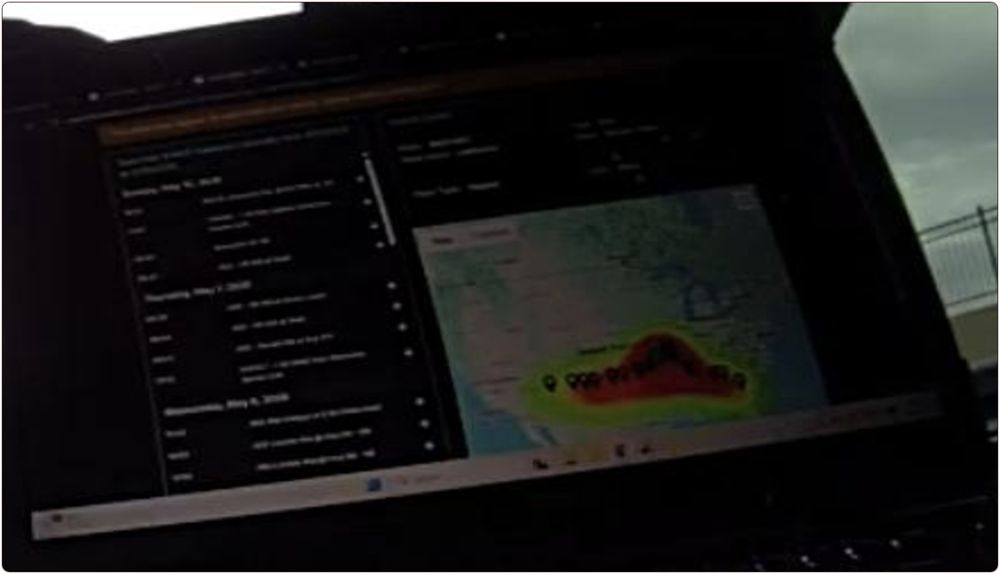
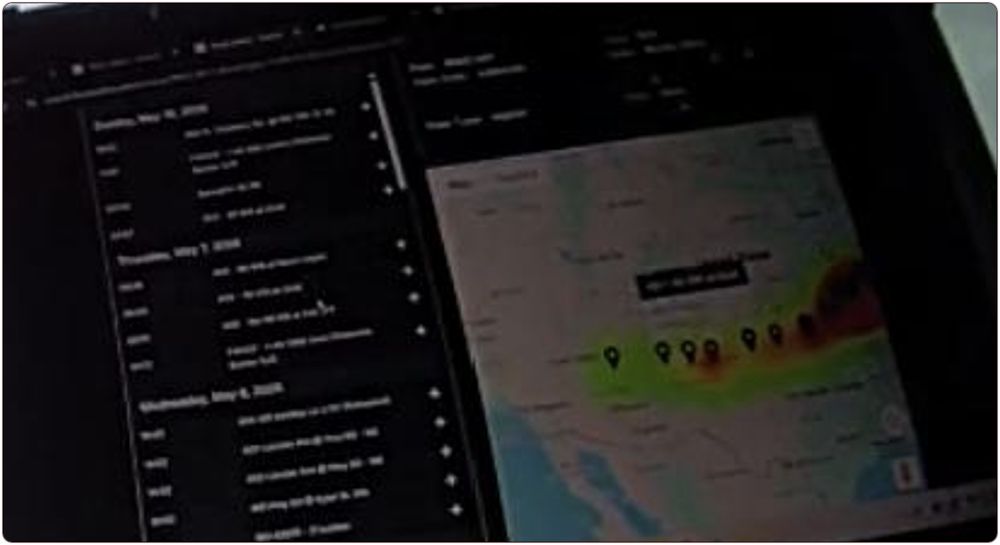
Source: U.S. District Court, N.D. Okla., Case No. 4:26-cr-00189-SEH, ECF No. 62, Opinion and Order, pp. 4 and 17 (bodycam exhibit, ECF No. 47-6 at 18:19:32 and 18:24:50).
What the City and the police have said about the courts
Every place in the City pages and police department records listed here where the City of Altoona or its police department points to a court ruling, the Constitution or a legal standard to support the plate-reader program, in their own words, beside what the October 1 order says on the same point. The order is from a federal trial court in Oklahoma and is not binding in Iowa.
-
City of Altoona, police technology page, "Has ALPR use been tested in court?"
“Yes. Federal courts have considered Fourth Amendment challenges involving license plate readers, and courts have upheld limited ALPR use involving vehicles traveling on public roads. For example, in United States v. Porter (5th Cir. 2026), a federal appellate court held that the license plate reader use presented in that case did not invade a reasonable expectation of privacy or constitute a Fourth Amendment search.”
The October 1 order: The order agrees that "nearly every court examining the issue to date has determined that ALPR technology use is not a search" (p. 29), then holds that the search in its own case "was a search under the Fourth Amendment" (p. 37).
-
“A search warrant must be supported by probable cause and must particularly describe the place to be searched and the person or thing to be seized. At this early stage, investigators may not yet have a particular person, plate, vehicle or private place that could be identified in a warrant.”
The October 1 order: "That search was not supported by probable cause, and it was done without a warrant in violation of [the defendant's] Fourth Amendment rights" (p. 37).
-
City of Altoona, police technology page, retention
“Under Iowa law, a captured registration plate image and accompanying data must be permanently deleted no later than 30 days after capture.”
The October 1 order: The deputy "had access to at least 30 days' worth of vehicle location information in many states" (p. 2), and the court held that searching that history was a Fourth Amendment search (p. 37).
-
Altoona Police Department, ALPR white paper, February 12, 2024, page 1
“ALPR use has been tested over and over through the State and Federal court systems, which have determined that ALPR usage does not violate citizens' Constitutional rights. It has been determined that: There is no expectation of privacy on a license plate (United States v. Diaz Castaneda, United States v. Wilcox, State v. Chambers).”
The October 1 order: "Neither the Tenth Circuit nor the Supreme Court have decided whether law enforcement's use of ALPR technology is a search for Fourth Amendment purposes" (p. 29). The plate-reader search "intruded on her reasonable expectation of privacy in the whole of her physical movements" (p. 37).
-
Altoona Police Department, ALPR white paper, February 12, 2024, page 2
“Scientific enhancement of manual process raises no issues, meaning if a person can stand in a public area and photograph vehicles as they drive by, then automation of that process is no different (United States v. Knotts).”
The October 1 order: "the Court is concerned that many of these decisions give too much weight to the language in the Supreme Court's decision in United States v. Knotts" (1983) "without adequately accounting for the context of ALPR technology" (p. 30).
-
Altoona Police Department, ALPR white paper, February 12, 2024, conclusion (page 29)
“The use of ALPR technology by law enforcement has stood up to repeated Constitutional scrutiny, which is supported by case law (see above). ALPR technology use, just as all law enforcement tools, must be used ethically and appropriately as guided by case law, sound policy, and procedures.”
The October 1 order: The court held that the search of a car's past plate-reader sightings in its case "was a search under the Fourth Amendment" (p. 37).
-
Altoona Police Department, Policy 424 (ALPR), section 424.4(b)
“An ALPR may be used in conjunction with any routine patrol operation or criminal investigation. Reasonable suspicion or probable cause is not required before using an ALPR.”
The October 1 order: The search in the court's case "was not supported by probable cause, and it was done without a warrant" (p. 37). The policy covers using an ALPR in general; the order addressed a search of a car's stored location history.
Searched and not found: no court ruling or constitutional argument about the cameras in the City Council minutes, the police department's December 2022 white paper, its three 2022 memos, its records-retention schedule or its 2025 annual report.
Analysis / opinion
Why this matters to Altoona
This part is the site’s own view, not a record. The reported facts are above, with their sources.
Since it began, this site has argued that a month of plate reads is a movement history, and that searching one should take a warrant. On October 1, a federal judge looked at a Flock search and reached the same place on the facts of that case: the court called the network "a type of indiscriminate mass surveillance" (p. 34) and held that searching a driver's past sightings without probable cause or a warrant violated the Fourth Amendment (p. 37).
The deputy in that case did what Altoona's own safeguards ask for. He typed a reason into each system, "traffic violation" and "investigation" (p. 3). The court still found no probable cause. A reason in a drop-down box is not a judge, and it is not a warrant. Altoona's program page describes the same kind of safeguard: a documented reason and case number for every search, quarterly audits, though no audit, audit log or count of searches was released in response to a records request, and a 30-day window.
The police department's own records point the same way. Of the 24 case examples in its December 2022 and February 2024 white papers, some of them the same case told twice, 2 describe a search of stored plate reads, and none gives a case number, the reason logged for a search, or a warrant. Its plate-reader policy says reasonable suspicion or probable cause "is not required" (Policy 424.4(b)). That is the search the Oklahoma court held needs a warrant.
Altoona went first, without waiting for the courts. The City's own page cites a Fifth Circuit ruling that found no search, and says courts still weigh each system's reach, retention and use case by case. That is the City acknowledging that the law is not settled. When the law is not settled, a department that searches past plate data without a warrant is betting that the courts will side with it. This ruling shows the bet can lose, and when it did, the evidence went with it.
This ruling does not bind any court in Iowa, which is in the Eighth Circuit, and Flock says it expects an appeal. We don't think Altoona should wait for one. The Council can require a warrant for any search of past plate data now, by a vote taken in a meeting where it goes into the minutes.
The ruling beside the City's own legal reasoning · Legal isn't the same as right · A snapshot versus a month of them · What the police records say the cameras produced
Comments
A comment appears right away under the display name you choose, so leave out your full name, address and any other personal detail. The editor can hide a comment, and one that contains a link, email address or phone number is held until the editor approves it. No account is needed.
No comments on this story yet.